Looking for the latest information on Conditional Statements If P Then Q? We've compiled comprehensive data, records, and insights about Conditional Statements If P Then Q.
Important Facts
Explore the main sources for Conditional Statements If P Then Q.
Recent Updates
Stay updated on Conditional Statements If P Then Q's newest achievements.
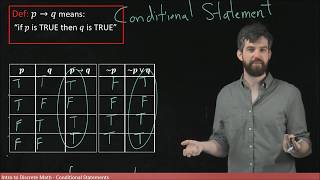
Truth Table for an Implication If, then statements
Geometry: 1-3 Conditional , P implies Q
Biconditional Statements | if and only if
PHILOSOPHY - Language: Conditionals #1 [HD]
Conditional Statement - If 'p', then 'q'.
Verify the Deduction Rule: If P then Q. If (Not P) Then Q. Therefore Q.
Logical Operators − Implication (Part 1)
Universal Conditionals P(x) implies Q(x)
Negating the Conditional
Logic Part 11: Writing If...Then statements Using Other Wording (Alternative forms of conditional)
How to Prove “If P, Then Q” Every Time
Full Guide
Data is compiled from public records and verified media reports.
Last Updated: October 15, 2026
Conclusion
For 2026, Conditional Statements If P Then Q remains one of the most searched-for information profiles. Check back for the newest reports.
Disclaimer: Disclaimer: All information is compiled from publicly available data, media reports, and analysis. Actual details may vary.
Summary
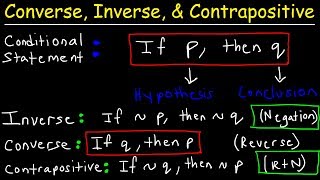
Learning Objectives: 1) Interpret sentences as being another -up to the truth tables video that I made. This time focused on understanding WHY, not HOW one column of your ... This geometry video tutorial explains how to write the converse, inverse, and contrapositive of a 5. Conditional Statement || Conditional proposition | If p then q statements in discrete Mathematics Radhe Radhe In this ... Learn how to create a truth table for an implication. An implication is an " Justin Khoo (M.I.T.) invites us to think about This video explains how to verify a deduction rule using a truth table. mathispower4u.com. We describe the notation for universal conditionals of the form In this video we use a truth table to prove that the negation of " In this video, we practice going between the form " In this lecture, we continue our work in L1 (propositional logic) by introducing the



![PHILOSOPHY - Language: Conditionals #1 [HD]](https://i.ytimg.com/vi/4Zxp2-_pLCE/mqdefault.jpg)


